
Clear Aligners or Braces as an Adult? How to Choose
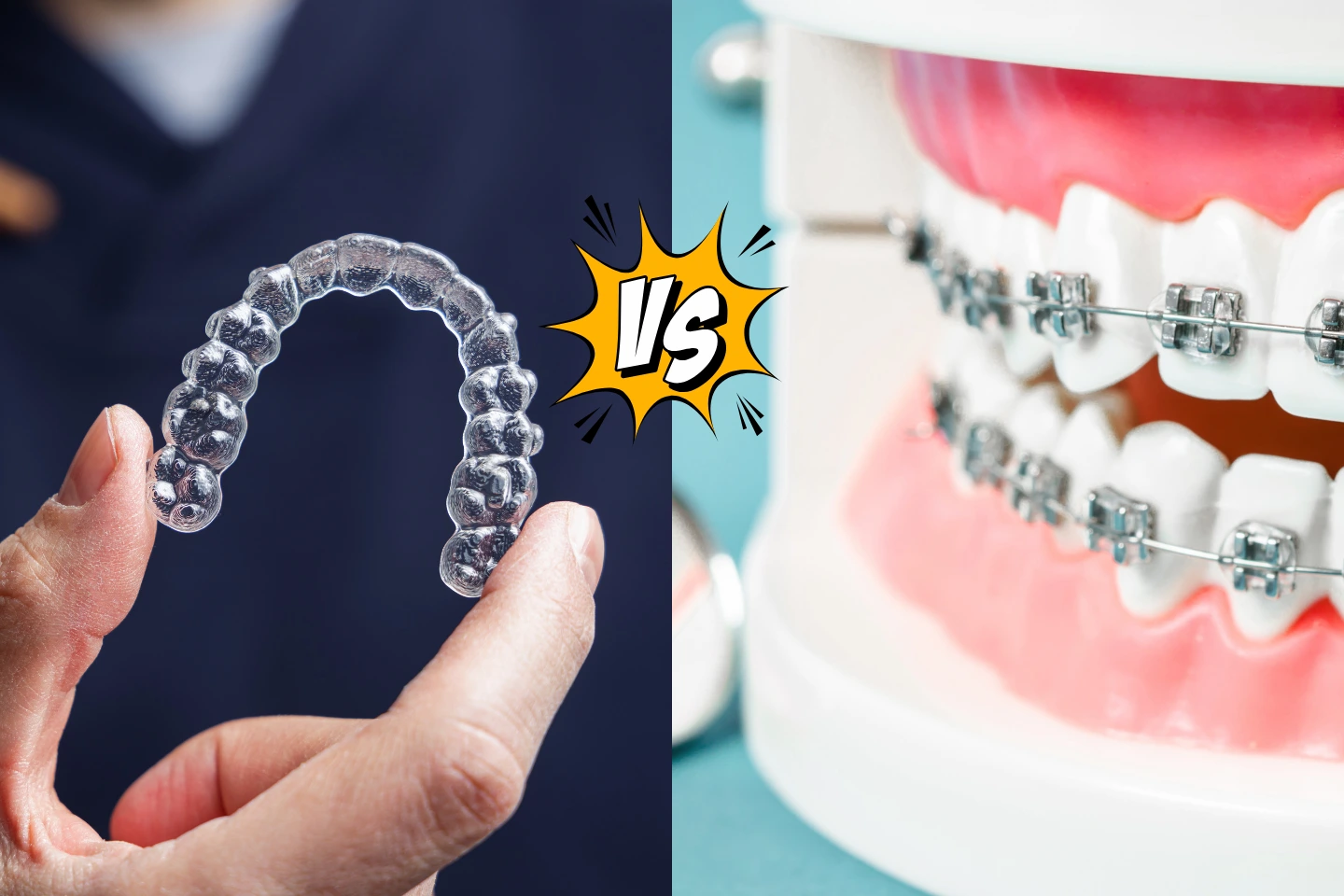
For many adults, clear aligners are the more practical choice: they are removable, much less visible and easier to fit around work and social life. But they are not right for every bite. Braces are still the better tool for some complex cases. Here is how to compare them honestly, so you know what to ask at a consultation.
The short comparison
· Appearance: aligners are nearly invisible, while braces use visible brackets and wires.
· Removable: aligners come out for eating and cleaning, while braces stay fixed in place.
· Daily commitment: aligners need about 22 hours of wear a day, while braces work around the clock without any effort from you.
· Eating: with aligners you take them out and eat freely, while braces mean avoiding sticky and hard foods.
· Cleaning: aligners let you brush and floss as normal, while braces need extra care around the brackets.
· Best suited to: aligners suit mild to moderate alignment and spacing, while braces handle complex bites and larger movements.
· Retainers afterward: needed with both.
What clear aligners are
Aligners are a series of clear, custom trays. Each set moves your teeth a small step, and you switch to the next set on a schedule. Dr. Pradeep Bholla is a certified Invisalign provider, and our clear aligners explains how treatment works at our office.
Planning starts with a digital scan instead of a tray of impression putty. Our intra oral scanner captures your teeth in minutes, and that scan guides your treatment plan.
What braces do well
Braces are brackets attached to the teeth and joined by a wire, and the orthodontist adjusts them over time. Because they are fixed, they work whether or not you are disciplined about wearing them, and they can handle more complicated tooth movement and bite correction.
We want to be clear about our own scope. Our practice focuses on clear aligners. If an evaluation shows your case is better suited to braces, we will tell you directly so you can decide with the full picture.
Which one fits your life?
Aligners tend to suit you if:
· You want treatment that is hard for coworkers and clients to notice
· You can reliably wear them most of the day
· Your concerns are mild to moderate crowding, spacing or rotation
· You want to eat and clean your teeth normally
Braces may be a better fit if:
· Your bite problem is complex or involves large jaw or tooth movements
· You know you will struggle to keep trays in
· Your orthodontist recommends fixed appliances for your specific case
The adult factors most guides skip
Adult teeth are not teenage teeth, and a few issues matter more once you are past your twenties.
Gum and bone health come first. Teeth should not be moved when gums are inflamed or bone support is weak. If you have signs of gum disease, we treat that first, and our gum treatment explains what that involves.
Existing dental work matters too. Crowns, bridges and implants do not move the way natural teeth do, and they affect planning. See our page on crowns and bridges if you have restorations. Jaw joint pain, grinding and a history of recession should also come up in your consultation.
Many adults only want to close a small gap. If that is you, read our guide to fixing gaps between teeth without traditional braces, which also covers bonding and veneers.
How long does treatment take?
It depends on the case, not the product. Simple alignment can be shorter than a complex bite, and consistent wear keeps aligners on schedule. We will give you an estimate based on your scan and goals rather than a one size number, and we will tell you what to expect at each stage.
Cost, insurance and financing
Price depends on the complexity of your case and the length of treatment, so we do not quote a fixed figure here. Adult orthodontic coverage is often limited or excluded, so check your plan and ask our team to look at it with you. We accept most major plans, and for the rest we offer CareCredit, Cherry and in house financing. Our new patients covers insurance and payment options.
Retainers: the part everyone forgets
Whichever you choose, you will need retainers. Teeth drift back toward their old positions, so retainers are what keep your result. Ask at the start how long you are expected to wear them and what a replacement costs.
Start with a consultation
The best way to choose is to have your teeth looked at. Healthy gums, a good scan and a clear goal tell us far more than any comparison chart. We recommend regular checkups before you start so your teeth and gums are in good shape. Contact our office or call (781) 444-4647 to book a consultation.
FAQs
Q. Are clear aligners as effective as braces?
For mild to moderate cases they can work very well. More complex bite problems may call for braces, which is why an exam comes first.
Q. How many hours a day do I wear aligners?
Plan on about 22 hours a day, taking them out only to eat, drink anything other than water, and clean your teeth.
Q. Do adults really need a retainer afterward?
Yes. Teeth can shift after treatment ends, and retainers protect your result, whether you had aligners or braces.
Q. What if I lose or break an aligner?
Call us right away. Do not skip ahead to the next tray without advice, because we will tell you whether to go back or replace it.
Q. Does insurance cover adult orthodontic treatment?
Sometimes, but many plans limit or exclude adult orthodontics. Our team can review your benefits before you start.


Hours of Operation
Monday, Wednesday–Friday: 9:00 AM - 5:00 PM
Tuesday: 9:30 AM - 5:30 PM
Saturday & Sunday: Closed


© 2026 Needham Dentistry & Implants | All Rights Reserved | Privacy Policy | HIPAA Policy | Digital Marketing by Remedo