
Dental Sealants vs. Fluoride Treatment: Which Prevents Cavities?
Ask a room of parents what they worry about at the dentist, and cavities usually top the list. Ask a room of adults, and you'll hear the same thing, just with a little more guilt about the extra cookie. Everyone wants to prevent cavities. The confusing part is figuring out which tools actually do that, and when.
Two of the most talked-about options are dental sealants and fluoride treatment. They sound similar; they both show up on the same appointment, and they're often mentioned in the same breath. But they work in very different ways. At Needham Dentistry & Implants, we get asked about them all the time, so here's a breakdown to help you feel more confident at your next visit.
What Are Dental Sealants and How Do They Work?
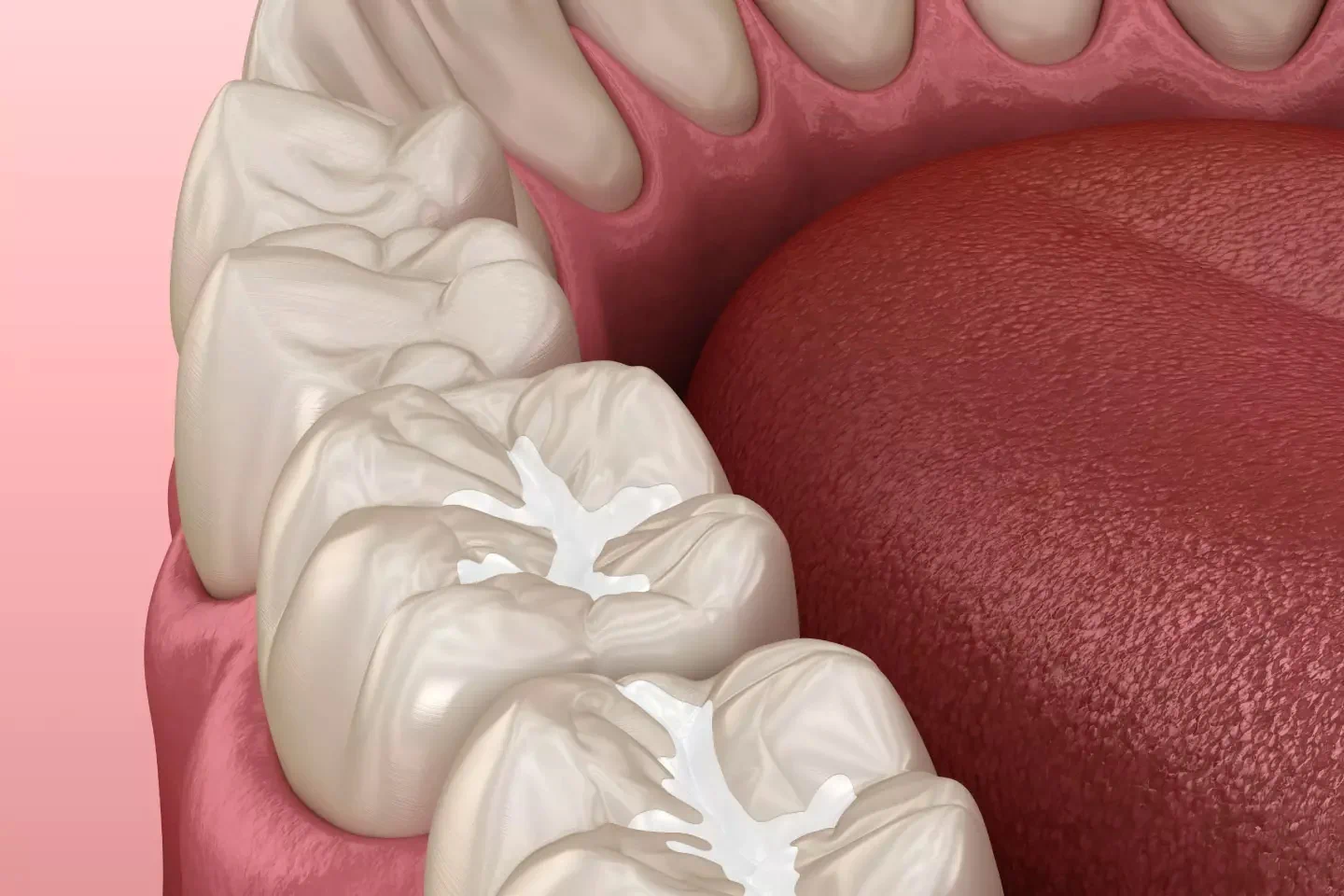
Think about the top of a back tooth. It isn't flat. It's covered in tiny grooves and pits, which are perfect hiding spots for food and bacteria. A toothbrush bristle often can't reach all the way into them, no matter how carefully you brush.
Dental sealants are thin, protective coatings that are painted onto those chewing surfaces. They flow into the grooves and harden, creating a smooth barrier that helps keep food and plaque out. There's no drilling or numbing. The process is usually quick and comfortable, and the sealant is applied right to the tooth.
Because they sit on the surface, sealants act like a shield. They don't change the tooth itself. They simply make it harder for decay to get a foothold in those hard-to-clean spots.
What Is Fluoride Treatment and How Does It Strengthen Teeth?
Fluoride works from a different angle. It's a mineral that helps strengthen enamel, the hard outer layer of your teeth. Every day, enamel loses minerals when acids from plaque and food attack it, and gains them back from saliva and fluoride. When more minerals are lost than replaced, decay can start.
A professional fluoride treatment delivers a concentrated dose, usually as a varnish, gel, or foam applied to the teeth. It helps enamel take in minerals and become more resistant to acid. You also get fluoride in everyday ways, like fluoride toothpaste and, in many communities, tap water.
So where sealants block, fluoride fortifies. Both aim to prevent cavities, just through different paths.
Dental Sealants vs. Fluoride Treatment: What's the Real Difference?
Here's a side-by-side look at how they compare.
Where they work: Sealants cover the chewing surfaces of back teeth. Fluoride treatment benefits the whole tooth surface, including smooth areas and the spaces near the gumline.
How they protect: Sealants create a physical barrier. Fluoride strengthens enamel from within so it can better stand up to acid.
How they're applied: Sealants are painted on and hardened with a light. Fluoride is typically brushed on as a varnish or applied with a tray.
How long they last: Sealants can hold up for several years but may wear or chip, so they're checked at regular visits. Fluoride treatments are generally repeated at intervals your dentist recommends.
Who commonly gets them: Sealants are often used for children and teens when permanent molars come in, though some adults may benefit too. Fluoride treatment is used across all ages.
Neither one is better in every situation. They solve slightly different problems.
Which Is Better for Kids: Dental Sealants or Fluoride?
Parents ask this a lot, and honestly, many kids get both. New permanent molars arrive around ages six and twelve, and they have deep grooves that can be tough to clean, especially for small hands holding a toothbrush. Sealants are often recommended for that reason.
Fluoride treatment, meanwhile, supports growing teeth by strengthening enamel as it develops. A child can have well-sealed molars and still benefit from fluoride on their other surfaces.
Your dentist will look at your child's teeth, their cavity history, their eating habits, and how well they're brushing before suggesting a plan. If your child has had cavities before, or if they love juice and snacks, the conversation might go a different way than for a child with a low-risk mouth.
Can Adults Benefit From Sealants and Fluoride Too?
Absolutely, though the reasons can differ. Many adults assume cavity prevention is a kid thing and stop thinking about it. But decay doesn't check your age.
Adults with deep grooves in their molars, especially if those teeth haven't had fillings, may be candidates for sealants. And fluoride treatment can be helpful for adults who are more prone to cavities. That might include people with dry mouth, gum recession that exposes tooth roots, or a history of frequent decay. Some medications and health conditions can also affect saliva, which plays a big part in protecting teeth.
Basically, if you're prone to cavities, it's worth asking.
Do Sealants and Fluoride Work Better Together?
For many patients, the answer is a reassuring yes. They aren't competing options. Think of them as teammates covering different parts of the field. Sealants protect the deep grooves on chewing surfaces, while fluoride strengthens enamel across the rest of the tooth.
Even with both, daily habits still matter a lot. Brushing twice a day with fluoride toothpaste, cleaning between teeth, and cutting back on frequent sugary snacks and drinks all help prevent cavities. Sealants and fluoride are extra layers, not substitutes for a good routine. And regular checkups let your dentist keep an eye on how everything is holding up.
Talk to Needham Dentistry & Implants About Cavity Prevention
Choosing between dental sealants and fluoride treatment doesn't have to feel like a quiz. The right answer depends on your teeth, your age, your habits, and your history. That's exactly what a quick conversation and exam can sort out.
The team at Needham Dentistry & Implants is happy to look at your smile, talk through your options, and put together a plan to help you prevent cavities. Whether it's for your child's new molars or your own long-term care, Needham Dentistry & Implants is here to answer questions in plain language. Contact Needham Dentistry & Implants today to schedule your visit.
Frequently Asked Questions About Dental Sealants and Fluoride Treatment
Q: Do dental sealants hurt?
A: Most people find the process painless. There's typically no drilling or numbing involved, since the sealant is simply painted onto the tooth surface.
Q: How long do dental sealants last?
A: Sealants can last several years, though this varies by person. Your dentist will check them during routine visits and can repair or reapply them if needed.
Q: Is fluoride treatment safe?
A: Professional fluoride treatment is widely used and, when applied as directed by a dental team, is considered safe for most patients. Your dentist can talk through the right amount for you or your child.
Q: Can sealants be placed over a cavity?
A: Sealants are meant for teeth without significant decay. If your dentist finds a cavity, a different treatment, such as a filling, may be recommended instead.
Q: How often should I get a fluoride treatment?
A: It depends on your risk of cavities. Some patients receive it at routine cleanings, while others may need it more or less often. Your dentist can suggest a schedule.
Q: Can I still get cavities with sealants or fluoride?
A: It's still possible. These treatments can help lower the risk, but they don't make teeth cavity-proof. Brushing, flossing, and regular dental visits remain important.
Q: Are over-the-counter fluoride products enough?
A: Fluoride toothpaste and rinses available over the counter can be a helpful part of daily care. Some patients, depending on their risk, may also benefit from professional treatment. It's worth asking your dentist.


Hours of Operation
Monday, Wednesday–Friday: 9:00 AM - 5:00 PM
Tuesday: 9:30 AM - 5:30 PM
Saturday & Sunday: Closed


© 2026 Needham Dentistry & Implants | All Rights Reserved | Privacy Policy | HIPAA Policy | Digital Marketing by Remedo